
A North Vernon memory quilt, stitched together with receipts
When I was a little girl, my grandpa used to take me into North Vernon on Saturday mornings. We would pass houses with tidy porches, neighborhood stores where somebody knew your family before you reached the counter, and sidewalks that were not treated like exotic civic luxuries requiring a steering committee, a consultant, two grant writers, a regional partnership, and a ceremonial photograph of six grown adults pointing at a map.
Back then, a sidewalk was not a “quality-of-place initiative.” It was concrete. The city built it because people lived there.
My grandpa never mentioned tax-increment financing. He never asked whether a mother pushing a stroller had submitted her request during the proper grant window. He never explained that an elderly resident walking beside traffic would need to patiently wait until a collection of familiar names formed a committee to investigate whether human beings benefit from not being struck by automobiles.
He was old-fashioned that way. He thought city government existed to run the city.
North Vernon used to feel like a nice place to be. It was never perfect. No town is. But it had the sturdy, ordinary dignity of a place built for the people who lived there.
Then, slowly, City Hall discovered glitter.
Not real glitter. That would have been cheaper.
Grant glitter.
It began as a sensible idea. Bring outside money into town. Improve neighborhoods. Restore old buildings. Fix what needed fixing. There is nothing wrong with that. A grant is a tool.
But somewhere along the way, North Vernon stopped using grants as tools and started using them as an operating system.
The first little crack in the sidewalk
The State Board of Accounts was already warning North Vernon in its 2008 audit that the city and its utilities lacked adequate segregation of financial duties and compensating safeguards. Too many accounting responsibilities were concentrated in the same hands. The people writing receipts could also record receipts, prepare deposits, write checks, record checks, and adjust records. Utility-office personnel could handle billing, collect payments, balance drawers, and prepare deposits. The office manager could also post adjustments to customer accounts. (in.gov)
That is not a small bookkeeping quirk. That is the municipal equivalent of storing the cash drawer beside an unlocked window and hanging a sign above it reading, “We are a small office. Please behave.”
By 2011, the auditors were still describing inadequate segregation of duties and recommending that city officials design controls or compensating safeguards. After Shawn Gerkin became clerk-treasurer, a corrective-action plan said the small staff made ideal separation impractical but promised a review of employee duties and more effective controls. (in.gov)
That sentence would become North Vernon’s favorite lullaby: small staff, limited resources, complicated process, future improvements.
Hush now, taxpayer. Go back to sleep.
Then City Hall found Stellar
In 2011, North Vernon received its Stellar Communities designation. The official state write-up lists Carnegie Library restoration, Irish Hill neighborhood revitalization, downtown streetscape improvements, a trail, a downtown plaza, and a façade program. It was not literally a downtown-only plan. Irish Hill was included, and some of the projects had obvious public value. (in.gov)
But the state’s own account also shows the moment the governing machinery began to change shape. Heading into an election year, the mayor and City Council appointed the Jennings County Economic Development Commission to oversee the Stellar application process so the effort would continue across future years. Kathy Ertel, the JCEDC executive director, was involved from the beginning. The team also hired engineering, planning, and grant-writing firms. (in.gov)
That may have helped the city win money. It also taught City Hall a dangerous lesson: you can move responsibility away from ordinary city government, wrap it in committees and partnerships, surround it with professional vocabulary, and make almost any decision sound too complicated for residents to question.
The sidewalk was no longer a sidewalk. It was now a component of a comprehensive strategic vision.
Which is government language for: Please stop asking when we are going to pour the concrete.
The February 2021 meeting belongs in a museum
If future historians want to understand what happened to North Vernon, they will not need to excavate a buried courthouse vault. They can read the minutes from February 8, 2021.
At that meeting, Kathy Ertel and Anna Walker appeared on behalf of the Jennings County Economic Development Commission. They requested permission to apply for a $250,000 Community Development Block Grant on behalf of the city to continue a small-business assistance program. Council approved the application. (cms7files.revize.com)
Then Jeff Walker, Dr. Steve Sollman, and Tom Taylor appeared on behalf of Joining Jennings for a Healthy Living. They supported building more sidewalks inside the city. The discussion included a requested sidewalk between Walmart and Rodgers Park Drive, along with sidewalks in the industrial park, on State Street, on Vernon Street, and along Madison Avenue.
The official minutes record the result in six perfect words:
“No motions or actions took place.” (cms7files.revize.com)
Then came the punchline.
At the same meeting, the park director requested permission to apply for a $10,000 Tactical Urbanism Grant. The temporary sidewalk work would allow city officials to observe how sidewalk improvements on Vernon Street might serve pedestrians and bicyclists. Council approved the application. (cms7files.revize.com)
North Vernon had reached the stage of government where officials needed a temporary grant-funded experiment to determine whether sidewalks help people walk.
Grandpa would have required a minute to absorb that. Then he would have asked whether the city planned to conduct a pilot study on roofs before deciding whether rain gets people wet.
About those Walker names
The public minutes place Anna Walker and Jeff Walker in the same February 2021 meeting, representing different organizations and discussing different issues. That fact alone does not establish that they are related, that either did anything improper, or that community involvement is suspicious by itself. (cms7files.revize.com)
But this is exactly why committee rosters, appointment records, conflict disclosures, grant paperwork, and organizational relationships should be easy for the public to inspect. When residents keep encountering familiar surnames around economic development, nonprofit initiatives, committees, downtown programs, and public requests, they are entitled to ask how the network fits together.
Not because every familiar name is guilty of something. Because public government should never operate like a family reunion with a reimbursement form.
Meanwhile, the audit reports kept arriving
The grant machinery became more elaborate. The basic financial machinery did not become noticeably less embarrassing.
An audit covering 2015 found deficiencies in the city’s internal controls over financial transactions and reporting. Employees responsible for issuing receipts and checks were also responsible for deposits, recording transactions, and reconciling funds. The State Board of Accounts said the lack of controls could allow material misstatements or irregularities to remain undetected. (in.gov)
The same supplemental audit found that North Vernon Redevelopment Commission expenditures exceeded budgeted appropriations by $1,535,922 in 2015. The city’s bank reconciliation also showed a $1,701 cash shortage at the end of that year. (in.gov)
Now, overspending an appropriation is not the same thing as somebody stuffing money into a coat pocket. But $1.5 million is not a rounding error, either.
That is not loose change between the couch cushions. That is the couch leaving the house, climbing into a truck, and driving away.
By the 2018–2019 audit, the State Board of Accounts found another collection of municipal curiosities. The city transferred $85,000 from a motor-vehicle-highway allocated fund without Common Council approval. Auditors also noted that not all required city personnel had completed internal-control training. (in.gov)
Then came the redevelopment snowplow.
The city used $146,144 in TIF funds to buy a plow truck with snow-removal equipment and another $634 for catering at a Redevelopment Commission meeting. The auditors said those were not authorized purposes for TIF money. (in.gov)
A redevelopment snowplow and a sandwich tray. There is your North Vernon snow globe. Shake it gently and watch the accountability drift downward.
Campbell lit the fuse. Ochs kept the boiler running.
The earliest audit warning I have traced so far belongs to the Harold Campbell era. By 2008, the internal-control weaknesses were already documented. In 2011, the Stellar structure placed JCEDC into the long-term continuity role. (in.gov)
Mike Ochs did not invent the entire machine when he became mayor. But he did not dismantle it, either.
The 2015 audit issues were discussed with Clerk-Treasurer Gerkin and newly installed Mayor Ochs in 2016. The later audit findings involving the unauthorized TIF spending, the unapproved highway-fund transfer, and incomplete internal-control training covered the Ochs-Gerkin years. (in.gov)
Ochs inherited a town with a rattling engine. Instead of rebuilding it, his administration appears to have mounted a cup holder on the dashboard and kept driving.
Gerkin is not the innocent new fellow who just found the keys
Shawn Gerkin became mayor on January 1, 2024, after serving 12 years as North Vernon’s clerk-treasurer. The city’s own biography says his staff allowed him to work beyond traditional clerk-treasurer duties, including planning city projects and working with department heads. It also highlights his involvement in READI and READI 2.0 projects. (northvernon-in.gov)
That matters.
Gerkin did not arrive from a distant county wearing reformer boots and carrying a flashlight. He was already inside the machine.
The city’s housing page says then-clerk-treasurer Gerkin and Economic Development Director Kathy Ertel were instrumental in the READI application and funding request. The page says Heritage Estates received $3.1 million in grant funding for subdivision infrastructure, along with a local match from the North Vernon Redevelopment Commission. (northvernon-in.gov)
Again, housing development is not automatically bad. North Vernon may need additional homes.
But the pattern is impossible to ignore. When city leadership wants a subdivision, a downtown project, a park amenity, a trail, a façade program, or another development initiative, it speaks fluent urgency.
When residents need ordinary sidewalks outside the showcase district, City Hall suddenly develops a severe allergy to direct action.
The showroom keeps getting polished
In 2025, the city announced $4 million for downtown infill development. The plans included 16 Uptown Lofts apartments, 54 units at Ironclad Flats, and renovation of the historic Red Men building into boutique short-term rentals and coworking space. The city announcement also said North Vernon had received a $2 million façade-improvement grant for downtown historic buildings. (northvernon-in.gov)
Boutique short-term rentals. Coworking space. Historic façades. Downtown infill.
Those may all be defensible projects. Some may be genuinely useful. But let us stop pretending they are the same thing as taking care of the whole city.
North Vernon has become very skilled at polishing its showroom while residents outside the display window are left navigating broken infrastructure, missing sidewalks, vague promises, and committees with clipboards.
The city once built sidewalks. Now residents receive a master plan.
The city once performed basic duties. Now residents receive a committee update.
The city once served neighborhoods. Now neighborhoods are invited to admire another rendering.
The payroll did not forget how to grow
While residents are told that basic infrastructure requires patience, planning, outside funding, and future grant cycles, reported city compensation has climbed sharply.
A secondary payroll database summarizing public compensation records reports that North Vernon Civil City’s average compensation increased 11.5% from 2024 to 2025, while the median increased 17.7%. It reports 164 compensation records for 2025, up from 158 the prior year. Those figures should be checked against the underlying Gateway payroll records before claiming that every increase was a raise, because total compensation can also reflect overtime, payouts, staffing changes, and temporary work. (govsalaries.com)
But residents are allowed to notice the contrast.
City Hall can find a ladder when the payroll needs climbing. When the rest of town needs a sidewalk, everybody starts searching for a committee chair.
The committee is where responsibility goes to take a nap
North Vernon’s own website says the Board of Public Works and Safety is required for the city and includes the mayor plus two people appointed by the mayor. Its current members are Mayor Gerkin and council members Baron Wilder and Pat Kirchner. (northvernon-in.gov)
That board exists for a reason.
City leadership cannot take credit for every grant-funded ribbon cutting while treating basic infrastructure neglect like an unsolved mystery discovered in a neighboring jurisdiction.
The mayor is not an honorary parade float. The council is not a collection of bobbleheads assigned to nod whenever downtown receives another decorative helping. The Board of Public Works is not a social club.
These people are responsible for governing the city.
Not merely the plaza. Not merely the façade district. Not merely the development map displayed at the next meeting.
The city.
All of it.
My favorite North Vernon memory
I still think about those old Saturday mornings with my grandpa. Maybe memory has softened the edges. It usually does.
Maybe the sidewalks were cracked in places. Maybe the buildings were not as pretty as I remember. Maybe the town had problems nobody talked about around children.
But North Vernon still felt like a town built for the people who lived there.
That is the part City Hall has slowly misplaced.
Not in one dramatic act. Not with one villain twirling a mustache behind the Carnegie building. It happened a little at a time.
A responsibility moved to a committee. A committee filled with familiar names. A grant application replaced a work order. A downtown project received urgency. A neighborhood request received discussion. An audit finding received a corrective-action plan. Another audit finding arrived. Then another.
The payroll grew. The showroom sparkled. The sidewalks waited.
North Vernon was not destroyed by outsiders. It was slowly hollowed out by a local government that became more interested in managing grants, projects, committees, and appearances than performing the ordinary work residents already paid it to do.
That is the sad part.
Because Granny is not asking City Hall to invent a new town.
She is asking it to remember what a town is for.
And unlike the usual hometown memory quilt, this one does not end with a warm little lesson about belonging.
It ends with receipts.
And a bill addressed to the people who have been running the place.

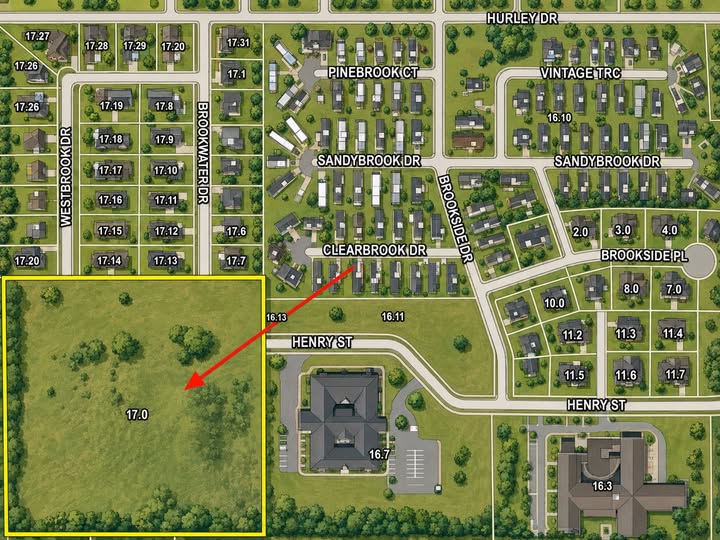
Might want to check GIS and see how many homes The Walkers own….Just saying
That’s one I haven’t looked at yet. They came at Granny pretty hard as soon as folks started paying attention. The level of immaturity they displayed was quite pathetic.